
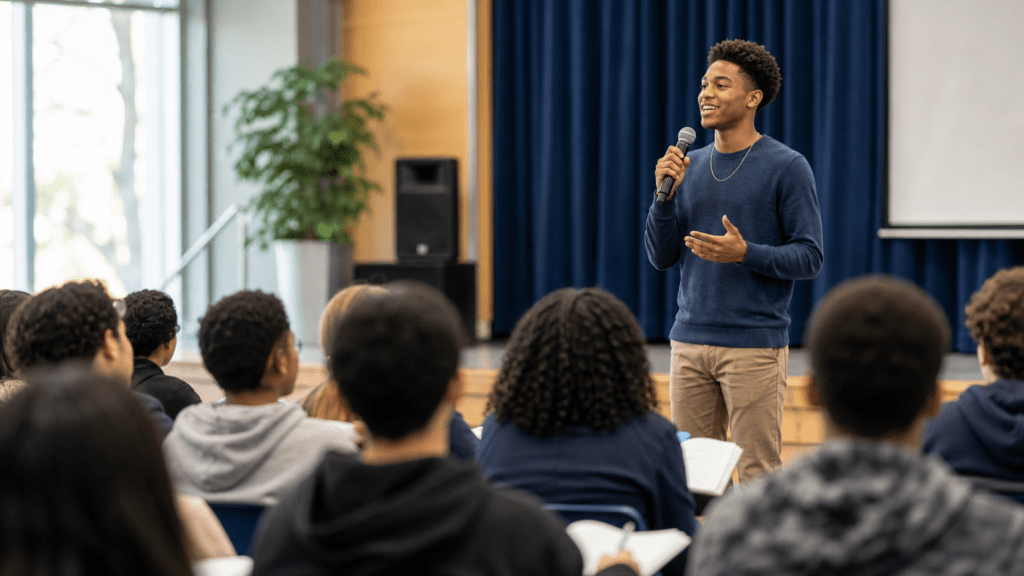
Youth Speaker for Schools, Programs & Student Leadership Events
A youth speaker can help schools and programs create a positive moment that students remember. The best sessions are not only inspiring; they also give young people language, examples, and practical ideas they can carry into classrooms, teams, clubs, and life outside of school.
Featured snippet answer: A youth speaker is someone who speaks to students about leadership, confidence, purpose, and positive decision-making in a way that is age-appropriate, school-safe, and encouraging.
What a youth speaker does
In a school or youth-program setting, a youth speaker should connect with students in a direct and relatable way. That usually means simple stories, clear lessons, and examples that speak to real situations like peer pressure, self-belief, teamwork, focus, and future planning.
The goal is not to perform for students. The goal is to give them something useful.
Where a youth speaker can make an impact
- School assemblies
- Leadership events
- Youth mentorship programs
- After-school gatherings
- Sports team meetings
- Career readiness or future-skills events
Students respond to real examples
Young people tend to respond well when the speaker is honest, grounded, and able to connect leadership with everyday choices. That can include how students show up in class, how they treat people, how they manage pressure, and how they think about their own growth.
How Shooting For Peace approaches youth speaking
Shooting For Peace uses a youth empowerment message that blends leadership, athletics, media, financial literacy, AI career readiness, and community engagement. That mix works well for schools because it stays focused on positive development without drifting into hype or unrealistic promises.
When appropriate, the message can also include the idea that students have room to lead now, not only in the future. That can be a powerful reminder for middle school, high school, and program audiences.
What schools should look for
Not every speaker is a good fit for young audiences. A school or program should look for someone who can hold attention, speak with clarity, and keep the message youth-safe and respectful.
- A message that matches student age and school culture.
- Language that is encouraging without being exaggerated.
- Ideas students can remember after the event ends.
- Respect for the school’s values and community standards.
- Internal consistency with the rest of the event plan.
Helpful references for student support
These public resources can be useful when planning youth-focused programs:
Why schools book youth speakers
Schools often want a speaker who can help students feel seen, focused, and capable. A strong youth speaker can support that by emphasizing belonging, discipline, goal-setting, and the power of small daily choices.
For students, that often feels more useful than a generic motivational message because the examples are close to their actual lives.
Internal links
- Motivational speaker for youth
- Top youth speakers
- Guest speakers for schools
- Jerome Williams speaker page
Frequently asked questions
What is the purpose of a youth speaker?
The purpose is to connect with young people in a way that encourages leadership, confidence, responsibility, and positive decision-making.
How is a youth speaker different from a general keynote speaker?
A youth speaker should be more tailored to student life, age-appropriate language, school culture, and youth development goals.
Can a youth speaker support a school assembly?
Yes. Youth speakers are often used for assemblies, leadership events, and programs where students need a focused and uplifting message.
Does Shooting For Peace customize youth speaking topics?
Yes. Topics can be shaped around leadership, sports, media, future skills, financial literacy, AI readiness, and community impact.
Request a youth speaker
If your school or youth program is looking for a speaker who can connect with students in a practical and positive way, request a youth speaker and share your event goals.